Unleashed Brands, the youth-enrichment company whose portfolio stretches from trampoline parks and martial arts instruction to tutoring and college preparation, is making a decisive shift in how it speaks to families.
After years of leaning heavily on conversion-led marketing, the business is now investing in more brand-led, socially native creative designed to connect with parents earlier in the decision-making journey.
That change has been driven in part by the appointment of Pat O’Toole in February 2025. The former CMO of Burger King and Mountain Dew was brought in as chief marketer to help revamp the company’s advertising approach, and his early focus has been clear: move the business beyond an almost entirely lower-funnel mindset and start building stronger, more resonant brands.
By his own assessment, Unleashed had previously operated almost exclusively in conversion-heavy territory, relying on tactics such as search and paid social to capture demand rather than create it.
The problem with that model was not simply tactical fatigue. It was that the company was not showing up in a way that truly resonated with mums, who are often the key decision-makers across its brands.
Urban Air Steps Forward as the Flagship Brand
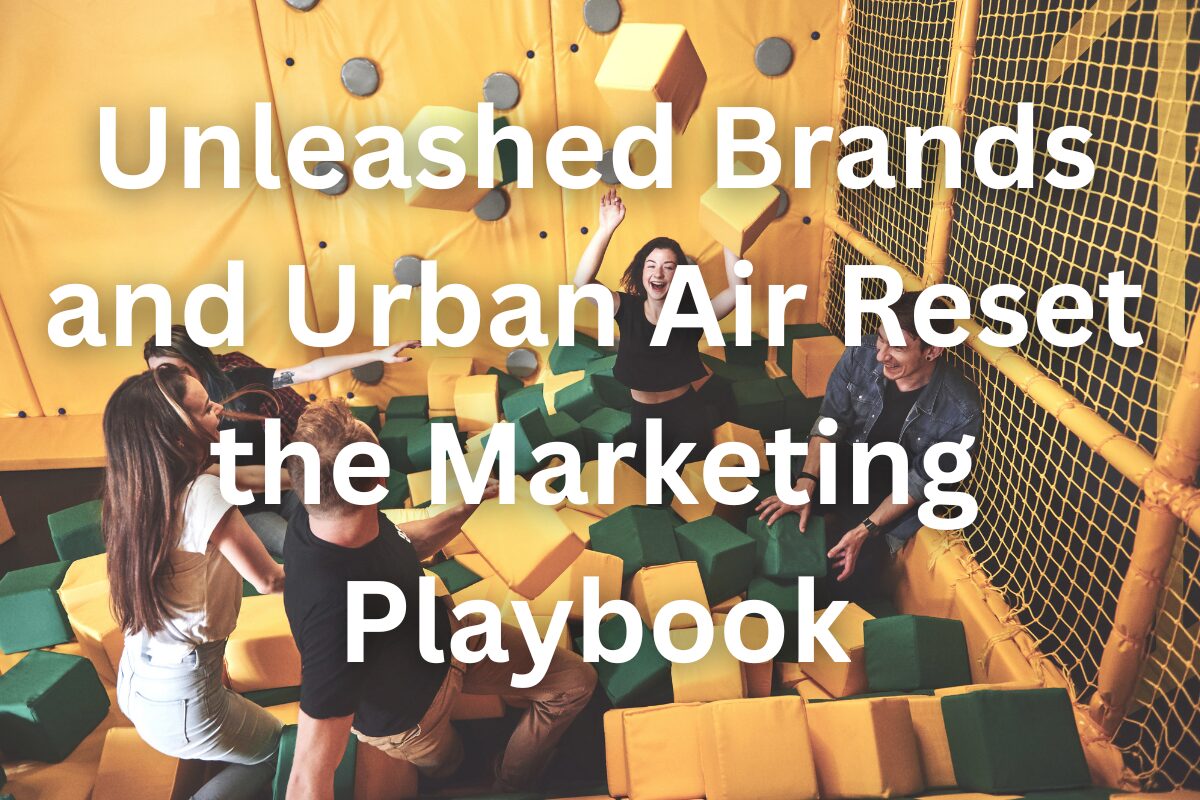
With 210 locations nationwide, Urban Air Adventure Park is the leading light within the Unleashed portfolio, and it has now become the clearest expression of the company’s new marketing ambition.
On March 5, Urban Air took the next step in that journey with the launch of a new wave of social content running across YouTube, TikTok, Instagram and Facebook.
More than just another content drop, the work signals a broader social strategy reset for the brand, one that embraces the visual language, humour and energy of modern platform culture.
In previewed creative, the tone is deliberately playful and exaggerated. One spot features a dad sampling Urban Air’s pizza before his head appears to explode in a lo-fi visual gag. Another stages a mum-versus-child laser tag battle with that evening’s dinner plans hanging in the balance.
The point is not polished perfection. It is relatability, surprise and platform fluency.
That work was created in collaboration with VaynerX, the agency brought on for its mid-funnel expertise. The partnership reflects a wider recognition that effective modern marketing is no longer just about closing the sale. It is about testing creative tensions, finding emotional hooks and then amplifying what lands.
From Performance Dependence to Brand-Building Momentum
The most striking element of Unleashed Brands’ evolution is not simply that it is making more entertaining content. It is that it is changing how it thinks about growth.
Rather than beginning and ending with direct-response tactics, the new Urban Air approach allows the brand to put creative into the market, see what resonates with consumers and then support the strongest ideas with paid media. That is a markedly different philosophy from the company’s earlier performance-first model.
It suggests a more modern marketing loop: creative experimentation first, consumer response second, scaled media investment third.
In practice, that means Urban Air is no longer just pushing offers or trying to catch high-intent buyers at the final stage. It is working to become more memorable long before the booking moment arrives.
For a brand in a category driven by emotion, family dynamics and repeat experiences, that shift matters. Birthday parties, active play and family outings are not purely rational purchases. They sit at the intersection of convenience, trust, excitement and the desire to make children happy without creating stress for parents.
A Broader Campaign Built Around Family Realities
The new social work is part of a wider Urban Air campaign that first launched in late January.
That broader effort spans connected TV, paid social, programmatic interactive video through KERV and video-enabled digital out-of-home channels, showing that the company is not treating creative as a one-platform exercise.
The campaign positions Urban Air as a better alternative to bad children’s birthday parties and as a compelling option for adventurous kids. It is a simple but powerful strategic lane. Rather than just selling attractions, it sells relief for parents and excitement for children.
That creative direction was the first major work overseen by O’Toole, and it was designed to help the brand recruit the next generation of children and parents as older customers naturally age out.
In other words, this is not just about short-term traffic. It is about renewing the customer base and keeping the brand culturally relevant as family habits and expectations evolve.
The messaging is rooted in clear consumer truths. Families come to Urban Air to get children off screens and out of the house. They also come because the brand offers worry-free birthday parties, removing much of the friction and unpredictability that can make celebrations stressful for adults.
Data-Rich Insights Are Helping Shape the Creative
One of the strongest advantages available to Urban Air is the sheer depth of consumer feedback it can draw from. According to O’Toole, the brand has an exceptional volume of useful data, and importantly, that data is not limited to surface-level metrics.
Every Urban Air visitor is invited to complete a net promoter score survey after their experience, and the company reportedly enjoys an unusually high return rate.
That gives the brand access to both quantitative and qualitative insight at scale. Add to that the stream of Google and Yelp reviews coming in from every location, and Urban Air has a rich bank of real-world sentiment to mine.
That feedback appears to be playing a meaningful role in shaping the work. Instead of creating campaigns from instinct alone, the brand is using direct family insights to identify what matters most, what frustrates parents and what experiences leave lasting impressions.
In a crowded leisure market, that kind of intelligence can be a genuine competitive edge. It allows creative teams to move beyond generic fun and into sharper, more specific storytelling that reflects how families actually think and behave.
A Multi-Agency Effort with Plenty of Room to Expand
Unleashed has not limited itself to a single creative partner. In addition to VaynerX, Urban Air has worked with creative studio Where The Buffalo Roam and used Omnicom shop Zimmerman Advertising for TV creative.
That TV work riffs on the many ways birthday parties can go wrong, landing on negative experiences involving clowns and petting zoos before positioning Urban Air as the more reliable, more exciting answer.
It is a clever strategic contrast: instead of merely celebrating what Urban Air offers, the ads highlight what families want to avoid.
The company clearly sees this platform as highly campaignable. That matters because the best family brands are often built through repeatable creative territories rather than one-off executions.
Urban Air’s space is broad enough to keep generating fresh scenarios, new jokes and sharper family truths, which gives the campaign room to evolve rather than fade after one burst.
Sylvan Learning Presents the Next, Harder Test
Having tackled Urban Air, Unleashed Brands is now turning its attention to Sylvan Learning, a brand with a very different set of challenges.
Unlike Urban Air, Sylvan operates in the supplemental education category, a space that has become more competitive and more crowded over time. The brand is also nearly 50 years old, which gives it heritage but also raises the question of how it should position itself in a changing market.
Once again, the company has teamed up with Where The Buffalo Roam and Vayner to examine where Sylvan fits in the industry landscape and how it can move out of the lower funnel. The strategic challenge is similar to Urban Air’s on paper, but in reality it is more demanding because the category is less visually immediate and less naturally entertaining.
O’Toole’s own view captures that contrast well. Urban Air, he suggests, is inherently easy to market because the content almost creates itself: children flying through zip lines, launching off slides and throwing themselves into energetic play.
Sylvan, by comparison, is an intellectual and creative challenge. Yet it is precisely that complexity that seems to have energised the team, with O’Toole signalling confidence that they are unlocking some impressive work.
Conclusion: Unleashed Brands Is Betting on Smarter, Broader Marketing
Unleashed Brands appears to be entering a more mature phase of marketing, one that recognises performance media alone is not enough to sustain growth or deepen brand relevance.
Under Pat O’Toole’s leadership, the company is pushing beyond a narrow lower-funnel model and embracing a more expansive strategy built around insight, experimentation and stronger emotional connection.
Urban Air is the clearest proof point so far: a flagship brand using social-native humour, multi-channel creative and rich consumer feedback to connect more effectively with modern families, particularly mums who hold real purchasing influence. The work is playful, but the thinking behind it is serious.
What comes next may be even more revealing. If Unleashed can apply the same strategic discipline to a more complex brand like Sylvan Learning, it will show that this is not just a one-brand refresh but a genuine company-wide transformation.
For now, the message is unmistakable: Unleashed Brands is no longer content with simply harvesting demand. It wants to shape it.