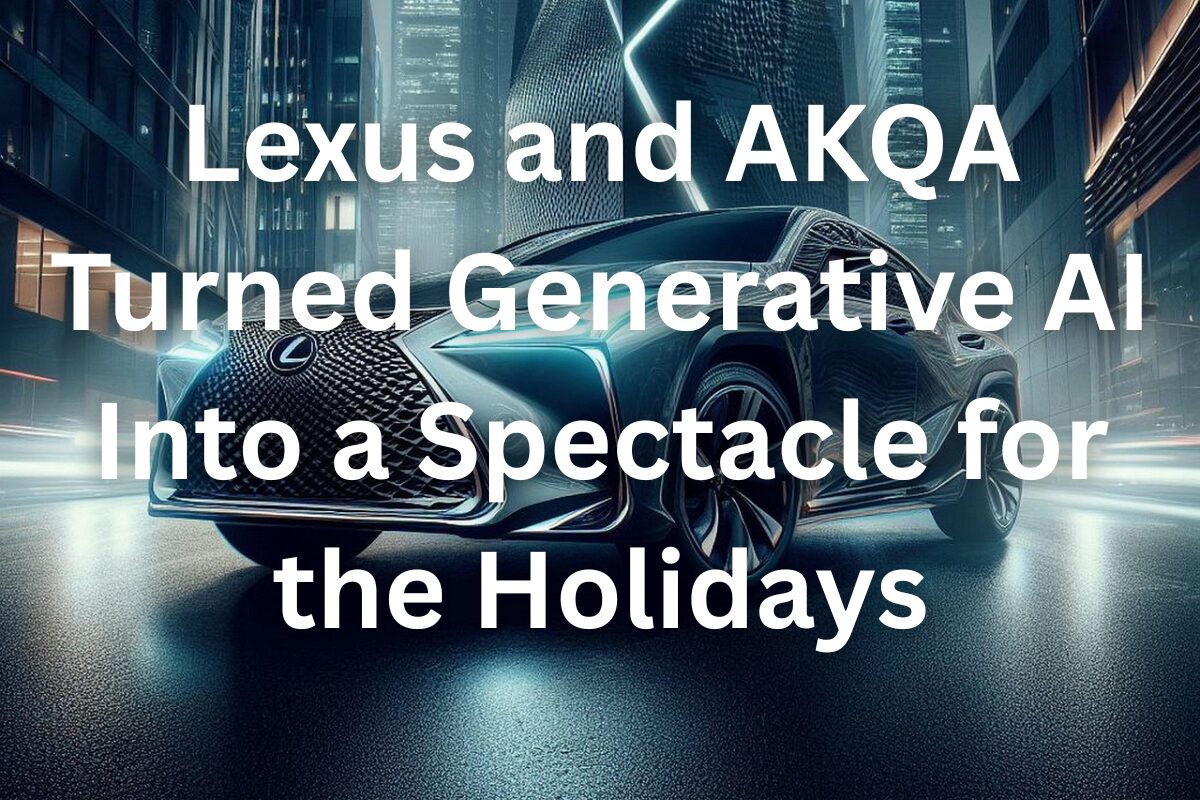
Lexus and AKQA are leaning into generative AI with an effects-heavy slice of holiday storytelling that aims to bottle seasonal wonder without relying on a traditional, linear plot.
The film, titled “Built for Every Kind of Wonder,” was developed inside AKQA’s Virtual Studio – a WPP-owned agency capability billed as a “next-generation content engine” designed to blend cinematic craft with leading-edge technology.
Dream logic over a conventional storyline
Rather than building towards a neat narrative arc, the video embraces an abstract, almost dream-like rhythm. It stitches together snowy vignettes that share a winter theme but don’t neatly “click” into a standard beginning-middle-end structure.
The result is closer to a visual poem than a typical automotive spot – an intentional choice in a market where holiday ads often lean on familiar emotional beats.
From frozen lakes to sleigh-like sparks
The film’s imagery swings between the quietly uncanny and the outright fantastical. One moment, a fish swims beneath a frozen lake; the next, a surreal, swirling ski slope feels like it’s been pulled from a child’s imagination rather than a camera lens.
Threaded through these scenes is a Lexus vehicle that doesn’t merely drive through winter – it sets off magical sparks and lifts skyward, echoing the visual language of Santa’s sleigh.
The twist: it’s all in a child’s snow globe
The story’s final beat reframes everything. Those strange, glittering winter images aren’t “real” within the world of the ad – they’re revealed as a child’s visions, sparked while staring into a snow globe during a car ride.
It’s a classic holiday device – reality gives way to imagination – delivered in a modern format that allows the visuals to go far beyond what many practical shoots could feasibly capture.
Where Lexus thinks AI fit – and where humans still matter
According to press materials, Lexus challenged AKQA to explore where Artificial Intelligence could fit into the brand’s winter promotions, and the automaker was impressed by the outcome.
Generative AI is framed here as a tool that can help brands realise concepts that might otherwise demand complex logistics and high costs – especially when the creative calls for physics-defying spectacle.
But the subtext is familiar to anyone watching AI’s evolution in advertising: even when AI accelerates production, outputs often need refining with a human touch.
Lexus’ EMEA brand and communications manager said the film plays to AI’s strengths in creating a magical world that aligns with the brand’s “built for every kind of wonder” positioning, adding that Lexus is already looking forward to the next project with AKQA.
Two holiday playbooks: EMEA experimentation, U.S. tradition
While “Built for Every Kind of Wonder” leans into inventive, AI-enabled visuals, Lexus is also sticking with a proven formula in the United States.
The brand is again running its longstanding “December to Remember” campaign – emotionally charged spots that spotlight different generations of a family, united around the holidays, with the ads set to Fleetwood Mac’s classic “Landslide.”
The split approach suggests Lexus is hedging smartly: pushing into new production methods in one lane while keeping a steady, sentimental anchor in another.
The wider AI holiday rush – and its mixed results
Lexus and AKQA aren’t alone in treating the festive period as a testing ground for generative AI. Other marketers have moved in the same direction, with outcomes that underline both the promise and the peril of the technology.
Coca-Cola, for instance, has spent the past two years running end-of-year spots that recreate classic commercials with an AI touch.
Critics have argued the execution lacks the trademark warmth people associate with the soft drink giant’s holiday marketing, while Coca-Cola has defended the work by saying it performs well in testing. The tension is telling: AI can replicate a look, but audiences still judge a brand on whether the feeling lands.
Then there’s the cautionary tale. McDonald’s pulled an ad in the Netherlands that used generative AI to depict how hectic and stressful the holidays can be – an example of how quickly backlash can flare, and how brand risk rises when AI becomes part of the creative headline rather than a quiet tool behind the scenes.
AKQA and WPP: transformation in the background
The campaign also arrives at a moment of change inside the organisations behind it.
AKQA has experienced a number of high-profile executive departures following the resignation of founder and CEO Ajaz Ahmed in October of last year. More recently, the firm has restructured around three key markets – Americas, EMEA and Asia-Pacific – and unveiled a revamped global leadership team.
Parent company WPP has been working to return to growth after a run of punishing client losses, and it has put AI innovation prominently at the forefront of its turnaround strategy.
In that context, a glossy, widely discussed AI-driven holiday film doesn’t just sell a car – it also signals what WPP and its agencies want to be seen as building next: faster pipelines, new creative capabilities, and a future-ready production model.
Conclusion: wonder built with technology – and measured by trust
“Built for Every Kind of Wonder” positions generative AI as a means to create holiday magic at scale: abstract winter dreamscapes, sleigh-like sparks, and a closing reveal that ties it all back to a child’s imagination.
At the same time, Lexus’ dual approach – experimental AI spectacle alongside the familiar emotional pull of “December to Remember” – reflects the industry’s balancing act.
As more brands weave AI into seasonal storytelling, the winners won’t just be those who can generate the boldest visuals. They’ll be the ones who pair the technology with human craft, protect brand warmth, and earn audience trust in a space where backlash can arrive as quickly as wonder.